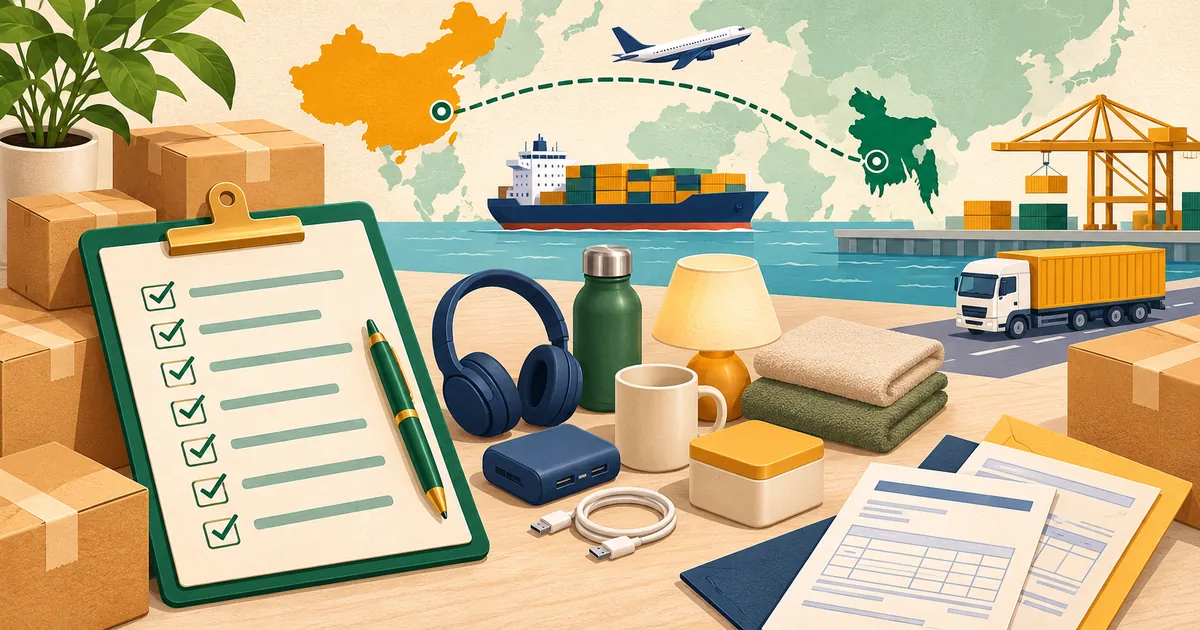
Short answer: To import products from China to Bangladesh, first confirm that your business and trade documents fit the planned goods. Then validate the product, verify a supplier, approve samples, calculate landed cost, agree terms, inspect the order, arrange freight and complete customs clearance with a qualified C&F agent.
The existing step-by-step import guide covers the overall route. This walkthrough is for a beginner deciding whether a first order is ready to move from an idea to a real shipment. It focuses on decision gates: what must be confirmed before you pay, before production and before dispatch.
Gate 1: Confirm that the product and business are ready
Begin with a specific product, customer and sales channel. “Electronics” is too broad; a defined charger specification for a particular retail segment is workable. Check whether buyers already purchase comparable items, what complaints they have and how quickly you could sell a trial quantity.
Commercial importing normally requires business and trade documentation. Requirements depend on the importer and goods and can change. Confirm current requirements with Bangladesh Customs, the relevant authorities or an experienced C&F agent. Do this before sending a deposit.
Gate 2: Define the product in writing
Write the material, size, colour, components, function, packaging, labels and quantity. Include clear acceptance checks. Photos are helpful but do not replace measurements and written requirements.
Decide which details are essential. If a supplier suggests a substitute, ask for the change in writing and test it before approval. The product specification becomes the reference for quotations, samples, inspection and any dispute.
Gate 3: Find and verify suitable suppliers
Search B2B platforms, industrial clusters, trade fairs or wholesale markets. Shortlist several suppliers that handle your product rather than asking one seller for everything.
Compare business identity, manufacturing capability, export experience relevant to the item, communication and sample quality. Ask who will receive payment and make sure the beneficiary details match the agreed entity or have a documented explanation.
A low price is not verification. Read the supplier verification guide before making a supplier payment.
Gate 4: Compare the complete offer
Request quotations against the same brief and quantity. Check whether the offer includes packaging, labels, moulds, domestic transport or export handling. Confirm the Incoterm and named place; terms such as EXW and FOB divide costs and responsibilities differently.
| Decision | Confirm before moving ahead |
|---|---|
| Product | Exact specification and approved sample |
| Supplier | Identity, capability and payment beneficiary |
| Price | Included work, Incoterm and quantity basis |
| Time | Sample, production and dispatch milestones |
| Quality | Inspection checklist and remedy |
| Logistics | Freight route, documents and clearance plan |
The live FOB vs EXW article explains a common first-order choice for Bangladesh importers.
Gate 5: Test samples and revise the specification
Order samples from the strongest candidates. Test fit, finish, performance, durability and packaging. If possible, compare samples side by side using the same checklist.
Do not approve a bulk order simply because the sample arrived quickly.
Gate 6: Calculate landed cost and cash exposure
Build a cost sheet before negotiating the final quantity. Include the product, packaging, inspection, China transport, freight, insurance where applicable, duty and tax, clearance, handling, bank charges and delivery inside Bangladesh.
Use a provisional range until your C&F agent has reviewed the product description and classification. Rules change; confirm with Bangladesh Customs or your C&F agent. Never invent a duty rate to make the numbers fit.
Gate 7: Agree the purchase order and payment stages
The order should identify the product, specification, quantity, unit price, packaging, timeline, inspection rights, payment stages and agreed remedy. Keep supplier bank-detail changes under strict verification; confirm through a known channel before paying.
Avoid paying the full order value to an unverified supplier. The right payment structure depends on the product, relationship and platform protections. Record every commercial change in writing.
Gate 8: Inspect before the shipment leaves China
Inspection is most useful when goods can still be corrected. Check quantity, appearance, function, dimensions, labels and carton condition against the order and approved reference.
A passed inspection does not guarantee every unit, but it gives structured evidence. A failed result needs a documented corrective plan and, when necessary, reinspection. Do not release a shipment because the production deadline is uncomfortable.
Gate 9: Arrange freight and documents
Choose courier, air or sea based on the goods, shipment size, urgency and handling needs. Batteries, liquids, magnets, fragile products and oversized items may require special planning.
Coordinate the commercial invoice, packing list, transport document and any other required papers with your forwarder and C&F agent. Requirements vary by product and can change. Use accurate descriptions rather than vague labels such as “accessories.”
Our shipping and logistics service can help coordinate the movement from supplier to destination.
Gate 10: Clear, receive and review
Your C&F agent manages the clearance process based on current documents and customs requirements. After delivery, count goods, photograph damage, separate defects and compare actual landed cost with the estimate.
Notes for buyers in India, Nepal or Sri Lanka: supplier and quality steps are similar, but registrations, customs processes and taxes must be confirmed in your own country.
How Jingxin Sourcing helps
Jingxin Sourcing can coordinate supplier search, samples, production follow-up, inspection and freight through shipping and logistics and related sourcing support. Read the overall China-to-Bangladesh import process and the FOB vs EXW guide before agreeing shipping responsibilities. Contact us or use WhatsApp to discuss your first order.
Frequently Asked Questions
How can I import products from China to Bangladesh?
Confirm your import readiness, define the product, verify suppliers, test samples, calculate landed cost, sign clear order terms, inspect before dispatch and arrange freight. Work with a C&F agent for current documents and clearance. Start with a manageable trial order instead of committing all available capital.
What documents do I need to import into Bangladesh?
The answer depends on the importer, product and shipment. Business and trade registrations plus shipment documents are commonly relevant, but requirements change. Ask Bangladesh Customs or a qualified C&F agent to review your exact goods and current documentation before payment. Do not rely on an old checklist alone.
How do I bring products from China for a small first order?
Small orders may travel by courier, air cargo or consolidated freight. The best method depends on weight, size, value, urgency and product restrictions. Compare a complete landed estimate, not only the freight quote, and confirm the clearance route before dispatch.
Is Alibaba enough to verify a Chinese supplier?
No. A platform profile is a starting point. Check the legal entity, business details, payment beneficiary, relevant capability and sample quality. For meaningful orders, consider an independent verification or factory audit. Keep product requirements and payment terms in writing.
How much should my first import order be?
There is no universal amount. Choose a quantity you can fund, store and sell while absorbing delays or defects. Calculate landed cost, keep working-capital reserve and negotiate a trial quantity where possible. The first order should test both demand and the supplier process.