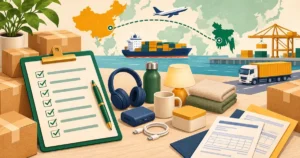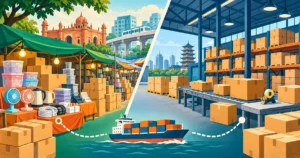
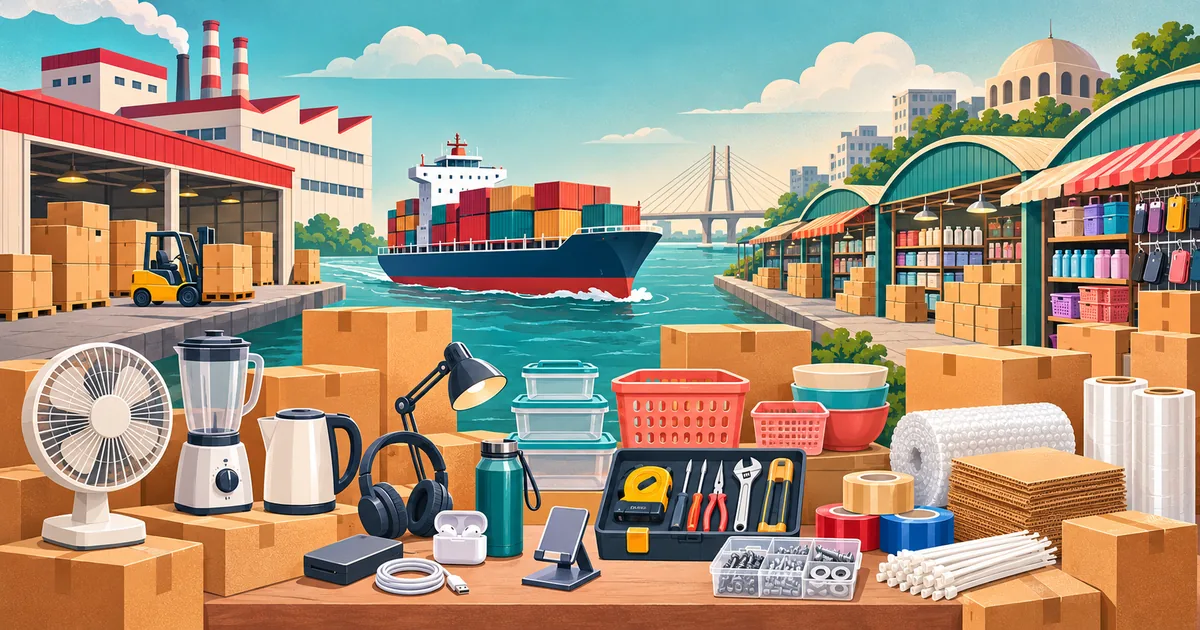
Short answer: Bangladeshi importers mainly buy consumer goods, electronics and accessories, household items, hardware and tools, packaging materials, and spare parts from China. The best category for you depends on your capital, your sales channel and how easily you can verify quality before shipping.
China products in Bangladesh are everywhere, from market stalls in Dhaka and Chattogram to online shops and factory floors. This guide explains the main categories importers buy, how to choose between them, and what to check before placing your first order.
The main categories Bangladeshi importers buy from China
- Consumer goods: kitchenware, bags, toys, stationery, small household items.
- Electronics and accessories: chargers, cables, earphones, lighting, small appliances.
- Hardware and tools: hand tools, fittings, fasteners, basic machinery parts.
- Packaging and printing materials: cartons, labels, films, tapes, printed boxes.
- Industrial spare parts and components: parts for local factories and workshops.
- Fashion accessories and trims: zippers, buttons, labels, fabric accessories.
These are examples of common categories, not a ranked market report. For a deeper category-by-category view, see widely used Chinese products in Bangladesh. Demand changes by season and by customs rules, so validate before you buy.
How to choose your category
- Start with a channel you already have. A shop, a Facebook page, a Daraz store or a factory that needs materials.
- Pick products you can inspect. Simple, standard products are easier to verify than complex electronics.
- Check rules first. Some goods need extra approvals or testing. Ask your C&F agent or check with Bangladesh Customs before ordering.
- Order a sample. Never move straight to bulk on a new product.
- Calculate landed cost. Include product price, freight, duty and tax, clearance, and local transport.
Where Bangladeshi importers find these products
Most buyers use B2B platforms such as Alibaba and 1688, wholesale markets such as Yiwu, or a sourcing agent who can search in Chinese and negotiate directly. Each route has different trade-offs on price, language and risk. See our comparison of Alibaba vs 1688.
Common mistakes
- Choosing the cheapest quotation without checking the supplier.
- Skipping samples and inspection.
- Ignoring packaging, which causes damage in transit.
- Forgetting duty, tax and clearance in the price calculation.
How Jingxin Sourcing helps
Jingxin Sourcing has a team in Dhaka and an office in Yiwu. We help Bangladesh importers search for suppliers, compare quotations, verify factories, inspect goods and coordinate shipping. Read our product sourcing service or send your product list on WhatsApp for a first review.
For buyers in India, Nepal or Sri Lanka: the same steps apply, but duty, licences and shipping routes differ by country, so confirm local rules.
Frequently Asked Questions
What products are imported from China to Bangladesh?
Common categories include consumer goods, electronics and accessories, hardware, packaging materials, spare parts and fashion trims. The right choice depends on demand, your budget and whether you can verify quality.
Which Chinese products are in demand in Bangladesh?
Demand varies by season and channel. Check marketplace listings, wholesale market activity and your own customer questions, then test with a small order instead of relying on a generic list.
How can I import China products into Bangladesh?
Find a verified supplier, request samples, agree specifications and price, arrange inspection and shipping, then clear customs through a C&F agent. See our import guide.
Do I need a licence to import from China to Bangladesh?
Commercial imports normally require valid trade documents and registrations. Requirements can change, so confirm current rules with Bangladesh Customs or your C&F agent before ordering.
Is it safe to buy Chinese products in bulk?
It is safer when you verify the supplier, test samples and inspect goods before shipment. Quality varies by factory, not by country.