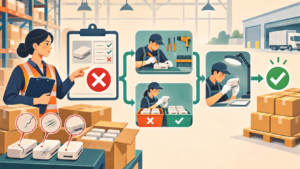

A pre-shipment inspection (PSI), often called a final random inspection (FRI), is a product quality check carried out near the end of production, when the order is finished and largely packed. The inspector draws a random sample from the finished goods and checks it against the agreed specification and acceptance limits. The sample result helps the buyer decide whether to release the balance payment and shipment.
What is a pre-shipment inspection?
PSI checks the goods—not the factory’s management systems. It is one stage in a wider quality-control process. Our guide to quality-control inspection stages when sourcing from China explains how pre-production, during-production, pre-shipment and container-loading checks fit together. For the difference between a factory audit and a product inspection, see our comparison guide.
When should you book it?
Book PSI after production is complete and most goods are packed, but early enough to allow correction and re-inspection before the shipping cut-off. A common operational convention is to have 100% of the order produced and at least around 80% packed; this is a planning convention, not a universal rule. Agree the timing in the purchase order and confirm the factory’s packing progress before dispatching an inspector.
Set the inspection date against the shipping schedule and payment terms. If the balance is due before shipment, agree whether a satisfactory inspection report is a condition for releasing it. If using a letter of credit, ask your bank whether an inspection certificate can be included as a document requirement.
What does a PSI check?
- Quantity: order quantity, carton count and SKU mix.
- Product conformity: model, materials, colour, components and approved specification.
- Workmanship: visible defects, finish, assembly and consistency.
- Function: operation and agreed functional tests.
- Dimensions: measurements against tolerances.
- Packaging: unit packaging, inner and master cartons, protection and packing method.
- Marking and labelling: barcodes, warnings, shipping marks and buyer-specific labels.
- Carton condition: packing integrity and agreed drop or handling checks where applicable.
Use the approved or “golden” sample as the comparison reference. Our sample-ordering and evaluation guide explains how to approve a reference sample before bulk production.
How sampling and AQL work
An inspector does not normally check every unit. A sampling plan determines how many units are selected from the lot. Plans are commonly based on ISO 2859-1 or ANSI/ASQ Z1.4. The lot size, inspection level and sample-size code determine the sample size; the agreed acceptance quality limit (AQL) determines the accept/reject numbers for each defect class.
Critical, major and minor defects should be defined before production. Do not treat AQL as a promise that a particular percentage of the entire shipment will be defective; it is a statistical acceptance-sampling method. The inspector should select cartons and units at random rather than allowing the factory to present only its best pieces.
What if the inspection fails?
A failed result is a decision point, not a reason to argue over the inspector’s wording. Review the report and evidence, send findings to the supplier in writing, agree rework, sorting or replacement, and hold the balance payment until the agreed corrective action is complete. Then re-inspect using the same scope and agreed acceptance criteria. Depending on the result and contract, you may accept, renegotiate or refuse the goods.
Keep the failure response proportionate to the defect and the contract. A sample inspection reduces risk but cannot guarantee every unit is defect-free, replace laboratory testing or prove regulatory compliance.
How PSI differs from other checks
A factory audit evaluates the supplier’s systems, capability and site. During-production inspection checks goods while manufacturing is still underway, when defects may be corrected before the full order is complete. PSI checks a random sample of finished goods near shipment. Container-loading supervision focuses on the goods and loading process as they enter the container.
For Bangladesh importers
Bangladesh importers can align PSI with the balance-payment milestone. Before production, agree the inspection scope and whether the report is required before payment. If using an L/C, confirm document wording with your bank. Check marking and labelling requirements with your C&F agent and relevant authority before approving artwork. Keep inspected quantities consistent with the commercial invoice and packing list. Our China-to-Bangladesh import guide covers the wider import sequence.
How Jingxin Sourcing helps
Jingxin Sourcing carries out quality-control and product inspections and packaging inspections, with staff inspection activity in Yiwu, Shenzhen and Guangzhou. To discuss inspection scope and timing for an order, see our quality-control service.
Frequently Asked Questions
Is PSI the same as a final random inspection?
Yes. Both terms commonly describe random-sample inspection of finished, mostly packed goods before shipment.
How long before shipment should PSI be done?
After production is complete and most goods are packed, with enough time before the shipping cut-off for rework and re-inspection.
Can I inspect only part of the order?
Yes, but the report only supports conclusions about the sampled lot and scope. Late or separately produced SKUs may need their own inspection.
Does a passed PSI guarantee there will be no defects?
No. It reduces risk within agreed sampling limits but does not inspect every unit or prove regulatory compliance.
Should the factory be told the inspection date?
Usually the factory needs to prepare access and goods, but the inspector—not the factory—should select the sample cartons and units.
Make PSI a purchase-order decision
A pre-shipment inspection is most useful when the scope is written into the order, the date is set against packing progress and payment, and acceptance values are agreed before production. Set those three things up at purchase-order stage and the report gives you a clearer basis for releasing the balance—or asking the supplier to correct the goods first. Before the order begins, assess the supplier’s production capability and prepare with our factory visit checklist. If you need support checking goods before shipment, explore Jingxin Sourcing’s quality control service.